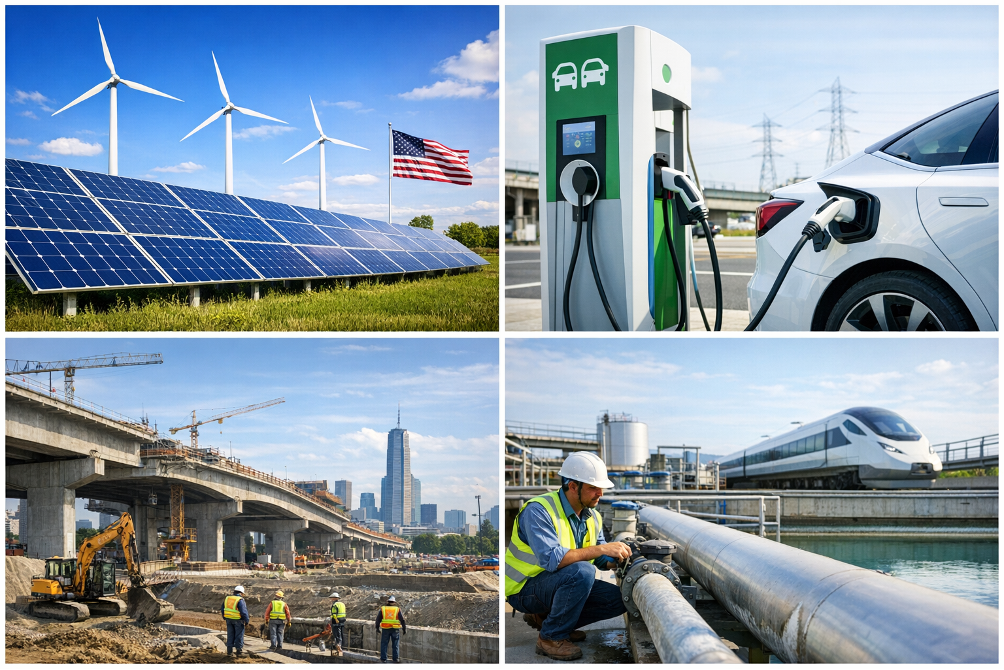
US clean energy plan has taken center stage as the United States government unveiled a major nationwide initiative focused on expanding renewable energy and modernising critical infrastructure. The ambitious program aims to strengthen economic growth, upgrade aging public facilities, and accelerate the country’s transition toward a low-carbon future.
The plan includes large-scale investments in solar power, wind energy, electric vehicle charging networks, and modern power grids, alongside upgrades to roads, bridges, public transit systems, and water infrastructure. Officials say the US clean energy plan is designed to boost resilience, improve efficiency, and reduce long-term dependence on fossil fuels.
US Clean Energy Plan and Job Creation
A core objective of the US clean energy plan is job creation. Government officials estimate that millions of new jobs will be generated across construction, manufacturing, engineering, and clean-technology sectors. Workforce training and reskilling programs are a key component, ensuring workers are prepared for emerging green energy industries.
Labor unions and business leaders have welcomed the focus on domestic manufacturing and long-term employment opportunities tied to renewable energy and infrastructure projects.
Infrastructure Development and Climate Resilience
Beyond clean energy, the initiative prioritizes American infrastructure development, including repairing aging highways, expanding high-speed rail, modernising public transportation, and improving access to clean drinking water. Investments in flood protection, grid reliability, and climate resilience are aimed at safeguarding vulnerable communities from extreme weather events.
Policymakers argue that these upgrades will enhance productivity, reduce maintenance costs, and improve quality of life nationwide.
Political Support and Economic Impact
Environmental groups have praised the plan for its focus on emissions reduction and sustainability, while industry leaders see it as a catalyst for innovation and private investment. However, debates continue in Congress over funding mechanisms, timelines, and implementation strategies.
Economists say the US clean energy plan could play a critical role in shaping long-term economic competitiveness, positioning the United States as a global leader in renewable energy and sustainable infrastructure.